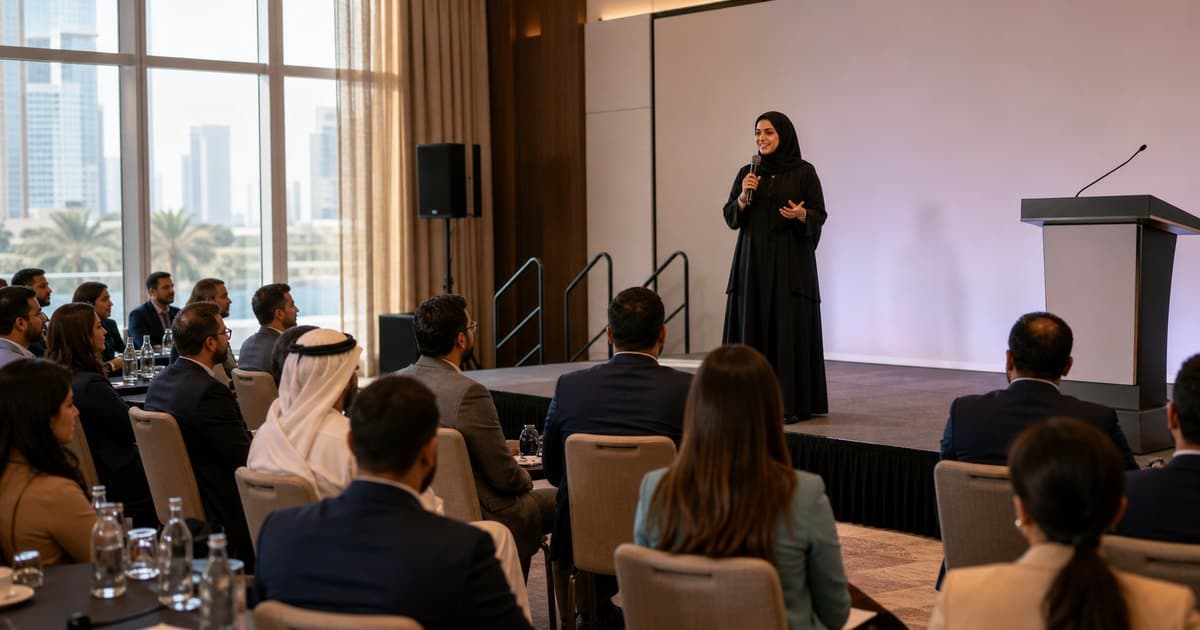
An event welcome speech should make the audience feel three things quickly: they are in the right room, the event has a clear purpose, and the next moment is worth their attention. When I open a Dubai corporate event, I am not trying to sound grand. I am helping a mixed room settle, look up, and move into the programme together.
The wording changes from event to event, but the job stays simple. Welcome the people who are present, name why they are there, give only the guidance they need, and make a clean first handoff. If the opening takes too long to do that, the audience starts waiting for the real event to begin.
I read the room before I say the first line
The welcome starts before the microphone is live. I watch how people enter, whether conversations are still active, where the senior guests are seated, and whether the room is ready to give its attention. A breakfast conference may need a calm, deliberate start. An evening awards room may need more energy, but not noise for its own sake.
I also check what happened immediately before me. Did guests just watch a brand film? Are they returning late from a networking break? Is the first speaker already on stage? The same written opening can feel right or wrong depending on what the room has just experienced.
Toastmasters' 2026 guidance on the first 30 seconds stresses presence, eye contact, and serving the audience. My takeaway for an event stage is practical: what does this room need from me right now?
My five-part welcome speech framework
I use a five-part framework, but I do not read it like five boxes. Each part earns the next one.
- Bring the room together. I pause, make eye contact, and begin only when the audience can hear the opening. The first line sounds like a welcome, not a fight with table conversation.
- Name the occasion. I say the event name and the reason people have gathered in direct language. This gives the room one shared starting point.
- Acknowledge the people who must be acknowledged. I use the approved names, titles, and order, then move on. The audience should feel respect, not hear a directory.
- Set one useful expectation. I tell guests what will help them follow the programme, whether that is the language flow, audience participation, a safety note, or the shape of the morning.
- Release the next moment. I finish with the exact speaker, film, or action that follows. The final line and the first production cue should land together.
I use the framework during rehearsal. If a sentence does not help the room enter the programme or reach the handoff, I cut it. My article on what a professional event MC actually does shows how that opening connects to the timing, transitions, and audience decisions that continue after the first handoff.
I keep acknowledgements exact and human
Corporate events in Dubai often bring leaders, partners, government stakeholders, speakers, and international guests into the same room. The organiser must approve who is acknowledged and in what order. Dubai Protocol describes precedence as a foundation for introductions and ceremony, which is why I do not guess from a seating plan or an old speaker biography.
Once the list is approved, I focus on delivery. I mark pronunciations, separate similar titles, and give each name enough space to be understood. I do not add a warm sentence after every person. That turns respect into repetition and delays the purpose of the event.
If a senior guest has not arrived, I confirm the alternative before walking on stage. The welcome should never expose a backstage uncertainty that the audience did not need to feel.
English and Arabic should serve the same opening
In a bilingual Dubai room, I decide what each language needs to accomplish. Arabic may carry the formal welcome and local acknowledgement. English may orient international guests and lead into a technical programme. Sometimes both audiences need the same essential information; sometimes repeating it would only slow the room down.
I rehearse the switch, not just the words. The pause before Arabic, the change in tone for a formal title, and the return to English all affect whether the welcome feels natural. My bilingual MC guide explains how I plan those choices around the audience rather than using translation as a default.
The goal is one room. Guests should not feel that the event stopped while another version began.
I rehearse the first handoff as one sequence
The opening is not finished when the script ends. I rehearse the walk-on, microphone, first pause, final sentence, applause, music, screen, and the next person's route to the stage. If the speaker is still crossing the ballroom after I say their name, the welcome has created an avoidable empty beat.
This is part of the preparation I describe in what to expect when you book me. I want the organiser, show caller, and first speaker to know how the room will move from welcome to content.
Before doors open, I read the speech aloud once more and cut anything that sounds written rather than spoken. I keep the event name, purpose, approved acknowledgements, essential guidance, and handoff. If a line does not help the room settle, understand the purpose, or meet the first speaker, it comes out. By the time I say the speaker's name, the audience should already be ready to listen.
Rima Iskandarani
Professional bilingual Events MC based in Dubai with 10+ years of experience hosting 150+ corporate, government, and entertainment events across the GCC.
Related Articles
Event Planning
What Does a Professional Event MC Actually Do?
A professional event MC guides the audience-facing program while coordinating timing, speakers, transitions, and live changes with the event team.
Working With Rima
What to Expect When You Book Rima Iskandarani
See what happens after you contact Rima Iskandarani about a Dubai event, from the first brief and fit check through preparation, event day, and follow-up.
Event Planning
Bilingual MC in Dubai: English and Arabic Event Hosting
A bilingual MC in Dubai plans when English, Arabic, or both will serve the audience and keeps the program moving without repeating every line.