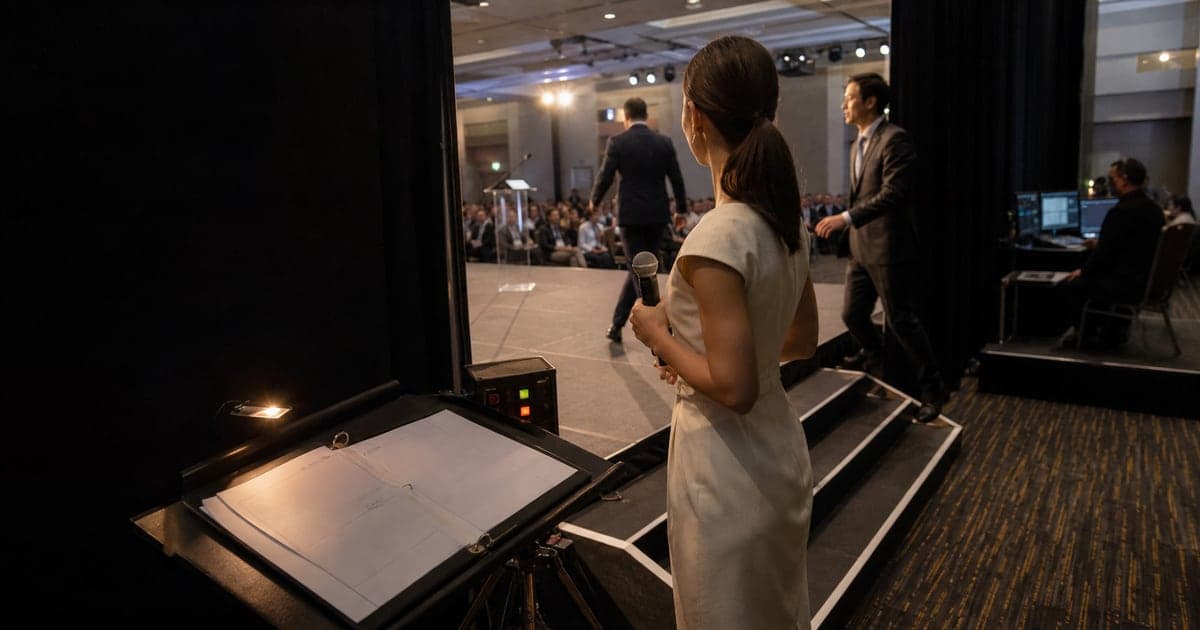
A professional event MC manages the audience-facing programme from preparation through closing. I study the run sheet and speakers, set the room’s tone, introduce each segment, protect timing, and keep guests oriented when plans change. The producer, stage manager, technical team, show caller, and safety lead still own the decisions within their specialist roles.
I think of the job as protecting the room. When the programme shifts, guests look towards the stage. I give them a clear next moment while the right people solve the operational issue.
What guests see, and what I am managing behind it
Guests see the visible programme. While I am speaking, I am also watching backstage readiness, audience response, timing, and what the room needs next.
- What guests see
- A warm welcome
- What I am managing
- Tone, language choice, expectations, and first impression
- What guests see
- A speaker introduction
- What I am managing
- Pronunciation, title, relevance, timing, and speaker readiness
- What guests see
- A smooth transition
- What I am managing
- Backstage readiness, run-sheet changes, and audience attention
- What guests see
- Audience interaction
- What I am managing
- Energy, fatigue, pacing, and whether the room needs a reset
- What guests see
- Calm handling of a delay
- What I am managing
- The audience-facing gap while the event team resolves the cause
- What guests see
- Closing remarks
- What I am managing
- Acknowledgements, next steps, timing, and final impression
Before the room opens, I want to understand the purpose of the event, who is in the audience, what each segment needs to achieve, and where the programme may become tight.
For Dubai events, I also prepare for the language mix. I ask how English and Arabic should flow rather than assuming one format. One programme may only need a bilingual welcome. Another may need Arabic titles, formal acknowledgements, or regular movement between both languages. I make those choices with the planner during the briefing.
PCMA’s guidance on improved panel sessions describes a related “content weaver” role that prepares with presenters, manages a run of show, plans audience participation, and connects ideas across a session.
If you are comparing hosts, my corporate event MC selection guide explains the preparation and room fit I would look for.
During the programme, I am making small decisions constantly
Once the event begins, I guide the audience through what is happening now and what comes next. I connect sessions, protect breaks and transitions, bring the room back after pauses, and close cleanly.
Speaker introductions are part of that work. I do not want them to sound like a biography copied onto a cue card. I want the audience to understand why this person matters now, and I want the speaker to have a confident starting point.
Names, titles, and pronunciation have to be correct, but so does the framing. A government official, technical founder, awards recipient, and panel moderator do not need the same introduction. In front of someone’s peers, that detail signals care.
I am also reading the audience. If attention is fading, I tighten a transition. If the room needs clarity, I slow the instruction down. If time is tight, I remove words that are no longer helping. These are among the lessons experience taught me.
What changes when the run sheet changes?
Live programmes move. A speaker runs long, a video needs more time, or the next panel is not backstage.
When that happens, I protect the audience-facing flow. I might shorten a transition, move a planned interaction, explain a necessary change, or hold the room while the responsible team fixes the cause. The audience gets a clear next step, not backstage confusion.
The response depends on the room. A formal audience may need a concise reset. A tired audience may need participation. A sensitive delay may need less explanation, not more.
What I do not do is take over someone else’s operational role. MeyerPro’s breakdown of producer, stage manager, and show-caller responsibilities places the overall plan and major decisions with the producer, stage and speaker flow with the stage manager, and technical cues and live timing calls with the show caller. I can keep guests oriented and adjust my stage language while the technical team repairs the system, the stage manager prepares the next speaker, and the producer approves a wider programme change. Safety remains with the relevant venue or safety lead.
MC, moderator, or both?
An MC guides the wider event programme. A moderator leads a specific panel, interview, or conversation. The roles can overlap, but they are not identical.
The World Economic Forum’s moderation and facilitation briefing separates steering a discussion towards its goal from guiding the process more neutrally. That distinction matters when deciding who should handle a panel inside a larger event.
For many corporate programmes, I can host the event and moderate selected conversations. If a panel is highly technical or needs specialist subject knowledge, a dedicated moderator may be the better choice while I continue to hold the wider event flow. I prefer to identify that in the briefing.
How do you know if your event needs a dedicated MC?
A dedicated MC becomes useful when several moving parts have to feel like one coherent event. I would pay particular attention if:
- Multiple speakers, panels, awards, videos, or live segments need to connect cleanly
- Guests need regular orientation about what is happening next
- Timing changes are likely to affect the audience experience
- English and Arabic hosting or formal acknowledgements need preparation
- The planner and production team need one person focused on audience-facing continuity
If the programme is one speaker with no real transitions, an internal welcome may be enough. If the day has several segments, changing timings, formal introductions, bilingual moments, or multiple teams backstage, a professional MC gives the audience one consistent guide while everyone else stays focused on their own role.
If you are weighing scope and budget, the event MC cost guide explains which programme details shape a professional quote. If you are closer to confirming a host, the booking guide shows how I prepare from the event brief onwards.
Strong MC work should feel clear, warm, and controlled even when the programme changes behind the scenes.
Rima Iskandarani
Professional bilingual Events MC based in Dubai with 10+ years of experience hosting 150+ corporate, government, and entertainment events across the GCC.
Related Articles
Hiring an MC
How to Choose the Right Corporate Event MC in Dubai
Rima explains how to choose a corporate event MC in Dubai by matching the host to the room, audience, format, moderation, language, rehearsal, and production brief.
Hiring an MC
How Much Does It Cost to Hire an Event MC in Dubai?
Rima explains what shapes an event MC quote in Dubai, what a proposal can include, how to compare scope, and what to send before requesting a price.
Working With Rima
What to Expect When You Book Rima Iskandarani
See what happens after you contact Rima Iskandarani about a Dubai event, from the first brief and fit check through preparation, event day, and follow-up.