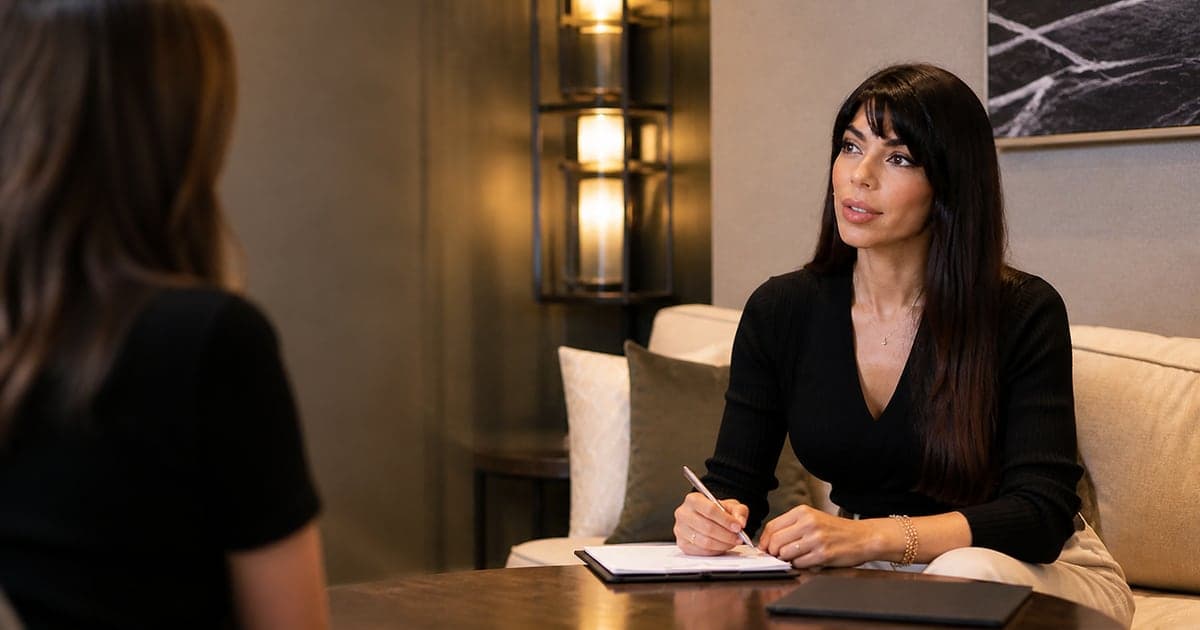
When you contact me about a Dubai event, I do not expect a perfect brief. I need enough to understand what you are planning, who will be in the room, how formal the event is, and what you need from the MC. From there, I check fit, clarify the hosting scope, prepare around the run sheet and speakers, coordinate with the event team on the day, and follow up afterwards where useful.
If you are still deciding what kind of host you need, start with the corporate event MC selection guide. If you are already considering me, this is what happens next.
From the first brief to the final follow-up
Each stage gives me information I need to host the event properly.
- You send the initial event brief. I ask for the date, venue or city, event type, expected audience, draft programme, language needs, and any known VIP, protocol, brand, sponsor, hybrid, or online requirements. Cvent's event-briefing guide places goals, audience, logistics, agenda, speakers, and responsibilities among the core pieces of a wider event brief. I use those areas to understand the hosting job, not to make you complete a formal document first.
- I check fit and availability. I look at the event format, audience, tone, language requirements, level of formality, and what you expect the MC to carry. I am not trying to be the right host for every event. If I think my style suits the room, we continue. If not, I would rather say that early.
- We have a discovery conversation. I ask what the event is trying to achieve, who matters most in the room, how the programme should feel, where English and Arabic are actually needed, and which moments require particular care.
- I define the hosting scope. That may involve hosting duration, physical or online format, bilingual requirements, run-sheet review, speaker introductions, rehearsal attendance, protocol preparation, travel, or additional sessions. The Dubai event MC cost guide explains why different events create different levels of MC responsibility.
- I prepare the programme. I review the run sheet, speaker details, names, titles, pronunciation, key messages, language flow, acknowledgements, and transitions. I am looking for what I need on stage, what still needs confirmation, and where the programme could become difficult to host cleanly if something changes.
- We coordinate on event day. I arrive with time to understand the room, check the stage and technical setup with the relevant team, confirm final changes, and make sure I know who is calling cues and who owns production decisions.
- We close the event and follow up where useful. Depending on the scope, that may mean a short debrief, feedback, clarification around footage use, or simply closing the loop after the programme.
How I decide whether the fit is right
Fit is more than whether I am free on the date. A government or semi-government programme can require a different level of formality and protocol from a brand launch. A conference can place more weight on speaker introductions and content accuracy. An awards ceremony can depend heavily on timing, names, category flow, and rhythm.
For a bilingual event, I do not assume that nationality or identity tells me which language an audience prefers. I ask what is actually known about the audience and what each part of the programme needs to achieve. The useful question is not simply whether English and Arabic are required. It is where each language is needed, for whom, and at which moments.
The discovery conversation helps me test what is fixed, what is still moving, and which parts of the programme carry the most pressure. That gives me a realistic view of the room before I agree to the role.
What I prepare before event day
Once the scope is clear, I work through the run sheet as the person who has to stand on stage and move the audience from one moment to the next. I check speaker names and titles, introductions, formal acknowledgements, language changes, hard stops, and cues.
PCMA's guidance on speaker information discusses details such as dates, locations, AV needs, session information, biographies, deadlines, and on-site logistics. I do not need every production detail, but I do need the parts that affect what I say, when I say it, and how I introduce people correctly.
The run sheet connects that preparation to live execution. Nunify's run-of-show guide describes a working document built around timing, actions, owners, cues, and speaker transitions, including an MC view of names, timing, cues, and hard stops. My review stays focused on the audience-facing sections I need to host confidently.
Preparation also gives me room to adapt when timing changes or the producer needs to move something without making the audience feel the backstage pressure.
How I coordinate on the day
On event day, I use the habits experience taught me to understand the room before the audience needs me. I check the stage, microphone, screens, cueing method, and final changes with the people responsible for them. Where possible, I confirm speaker names and pronunciation again.
I also make sure the production boundaries are clear. I host the audience-facing programme, but I am not replacing the producer, stage manager, technical team, or safety leads. The professional MC role guide explains that division in more detail.
Once the event starts, the preparation should disappear into the experience. The audience should hear clear introductions, understand what is happening next, and feel that the programme is being held together even when something changes behind the scenes. You can see examples of my work on stage if you want a better sense of how that looks in practice.
What happens after the event
After the programme, follow-up can be simple. There may be feedback to exchange, a short debrief, or a question about whether footage can be used and in what context. If nothing further is needed, we close the event cleanly.
What matters to me is that you know what I need, why I am asking for it, and where my responsibility starts and ends. That gives me the context I need to do the job well without turning the booking process into something heavier than it needs to be.
If you already have a date and even a rough programme, send me the event brief. It does not need to be polished. I can start with what you know and tell you what I need next.
Rima Iskandarani
Professional bilingual Events MC based in Dubai with 10+ years of experience hosting 150+ corporate, government, and entertainment events across the GCC.
Related Articles
Hiring an MC
How to Choose the Right Corporate Event MC in Dubai
Rima explains how to choose a corporate event MC in Dubai by matching the host to the room, audience, format, moderation, language, rehearsal, and production brief.
Hiring an MC
How Much Does It Cost to Hire an Event MC in Dubai?
Rima explains what shapes an event MC quote in Dubai, what a proposal can include, how to compare scope, and what to send before requesting a price.
Event Planning
What Does a Professional Event MC Actually Do?
A professional event MC guides the audience-facing program while coordinating timing, speakers, transitions, and live changes with the event team.