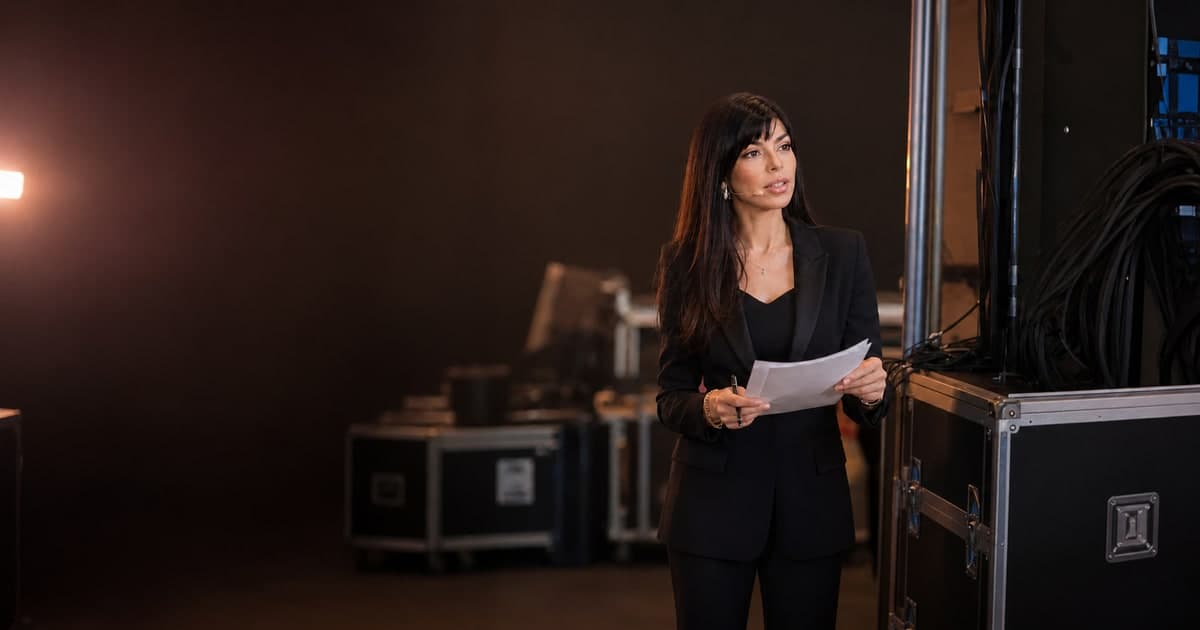
At my first event, I stood backstage with my heart pounding and a script held tightly in my hand. I had practised for hours. I knew every word. Then the first speaker went off schedule, and the script no longer matched the room.
I panicked. I kept following the words because I thought a good MC was a perfect MC. The event continued, but I was exhausted by the effort of trying to control every line.
Around my 150th event, the unexpected had not disappeared. My relationship with it had changed.
My first event was about not making a mistake
Early in my career, preparation meant memorising. If I could remember every line, I believed I would be ready. I concentrated so hard on the next sentence that I left very little attention for what the speaker, audience, or production team was doing.
When the timing shifted, I did not yet have another route. The script felt like the event rather than one part of it. Going away from the page felt like failure, even when the page had stopped fitting the moment.
That first event taught me something I could not have learned from rehearsal alone: preparation needs options. It should help me listen and respond, not make me afraid to move.
Around event 150, the room still changed
At a gala around my 150th event, a speaker ran ten minutes over, a video tribute developed a technical problem, and the award-recipient list changed late. None of those moments was mine to solve alone.
The production and client teams confirmed what was changing. I shortened transitions, used the approved bridge while the video was checked, and updated the introductions from the revised list. The programme moved through a different route from the one we had expected.
What I remember most is not that everything went perfectly. It did not. I remember feeling calmer. I could listen to the cue, understand what the team needed from me, and speak to the audience without letting the backstage pressure take over my delivery.
Experience had not given me control of every variable. It had given me more ways to prepare for the variables I did not control.
Preparation means something different to me now
I still care about the words. Names, titles, acknowledgements, language, timing, and transitions deserve exact preparation. The difference is that I no longer confuse being word-perfect with being ready.
Now I want to understand the purpose of each segment, the audience, the hard stops, the flexible moments, the cue owner, and the fallback. I mark the script so I know which lines are fixed and where I have room to breathe. I rehearse the handoff, not only my sentence.
I also ask more questions. Where is the next speaker waiting? Who can approve a changed title? What happens if the video does not play? Which section can shorten if a keynote runs long? What does the audience need to know, and what belongs backstage?
Those questions make me feel freer on stage because I know where my choices begin and end.
I listen more than I did at the beginning
My first-year attention was on myself: the script, my pace, my fear of forgetting. Today, I pay more attention to the speaker's final thought, the audience's participation, the timer, the screen, and the cue coming from production.
That is how a transition can connect to what was actually said instead of sounding as if it belongs to another event. It is also how I notice when an instruction needs to be repeated, a panel answer needs a cleaner handoff, or the room needs a short breath before the next moment.
Listening does not mean guessing what everyone feels. I work from what I can observe and from the audience brief, feedback, and production direction. If something important may be changing, I check it with the person who owns the decision.
Recovery is now part of the preparation
I used to think recovery began after something went wrong. Now it begins in the brief and rehearsal.
We can agree on the holding line, the shorter introduction, the backup order, the person who sends a correction, and the cue that releases me. I do not need to invent a clever solution in front of the audience if the team has already prepared a safe one.
When I make a small verbal mistake, I correct it and continue. When the programme changes, I listen, confirm, and use the agreed route. The goal is not to pretend nothing happened. It is to keep the audience oriented while the right people handle the decision.
I have more than ten years and 150-plus events behind me, but I do not see that number as a finish line. I still review which timings held, which transitions felt heavy, which questions worked, and what I should change next time.
That is the experience I want a planner to see: not a promise that nothing will go wrong, but evidence that I prepare, listen, work with the team, and keep learning. You can compare that reflection with Rima’s event portfolio and the programme closest to your own brief.
Rima Iskandarani
Professional bilingual Events MC based in Dubai with 10+ years of experience hosting 150+ corporate, government, and entertainment events across the GCC.
Related Articles
Working With Rima
What to Expect When You Book Rima Iskandarani
See what happens after you contact Rima Iskandarani about a Dubai event, from the first brief and fit check through preparation, event day, and follow-up.
Hiring an MC
How to Choose the Right Corporate Event MC in Dubai
Rima explains how to choose a corporate event MC in Dubai by matching the host to the room, audience, format, moderation, language, rehearsal, and production brief.
Event Planning
What Does a Professional Event MC Actually Do?
A professional event MC guides the audience-facing program while coordinating timing, speakers, transitions, and live changes with the event team.
Event Planning
Why I Always Ask About the Audience Before the Program
Rima explains the audience questions she asks before shaping an event program, from purpose and language to access, room dynamics, and live participation.