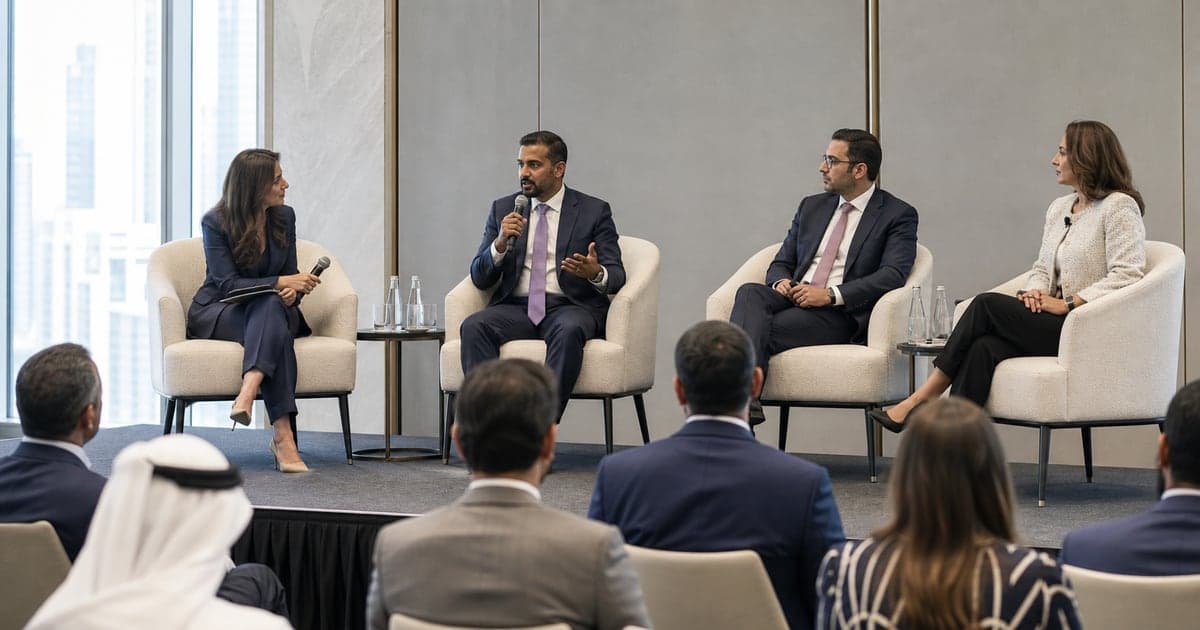
The best panel discussion questions do not produce four separate speeches. They help the panellists respond to one another and take the audience somewhere useful. For a GCC conference, I build the conversation in four stages: establish each position, surface a real point of tension, ask for evidence, then close with a practical choice the audience can remember.
I do not arrive with a list of clever questions and hope they fit. I start with the audience, the event's purpose, and the reason these particular people are sharing a stage.
I decide what the audience should leave with
Before writing a question, I ask the organiser what a good session changes for the people in the room. Do they need to understand a new regulation, compare investment approaches, make a technology decision, or see where regional leaders genuinely disagree? A topic such as "the future of finance" is too broad to moderate well. An audience outcome gives me a route.
This is the same reason I ask about the audience before the programme. A room of founders, institutional investors, regulators, and students may hear the same answer very differently. The brief should tell me who needs the panel and what they can already be expected to know.
Nature's guidance on preparing for panel discussions also begins with the format and purpose. I turn that into one sentence at the top of my moderator notes: by the end, this audience should be able to do or understand what?
My four-stage panel question framework
The four stages give the session movement. They are not four questions that every panellist must answer in turn.
- Opening position. I ask for a clear view, not a biography. "What has changed most in this market over the past year, and why does it matter to this audience?" gives each panellist a place to stand.
- Useful tension. I connect one answer to another. "You have described speed as the priority; where do you think that creates unacceptable risk?" invites contrast without manufacturing conflict.
- Evidence. I ask for a decision, example, or result that tests the claim. "What have you changed in practice because of that view?" moves the panel beyond polished opinion.
- Practical close. I narrow the final answer. "What is one decision leaders in this room should make differently next week?" gives the audience something they can carry out.
The order can flex. A strong opening answer may reveal the tension immediately. A vague claim may need evidence before I invite another panellist to challenge it. The framework keeps me listening rather than waiting to read the next line.
Contrast should be earned, not staged
Many panel question lists promise debate, but disagreement is only useful when the audience understands what is at stake. I do not ask people to "argue the other side" for theatre. I listen for a genuine difference in priorities, assumptions, time horizons, or definitions, then name it clearly enough for the panellists to explore.
Toastmasters' panel moderator guide recommends knowing the topic and panellists, confirming titles and names, and balancing introductions. That preparation lets me challenge an idea without misrepresenting the person behind it.
For technical or regulated sectors, I prepare the way I describe in how I learn an unfamiliar industry. I map the terms, current questions, audience knowledge, and boundaries I should not cross. I am there to make expertise accessible, not to pretend it is mine.
I brief panellists without scripting the answer
I share the session purpose, shape, time, audience, and likely themes before the event. I also tell panellists that I may follow an answer, connect it to someone else's view, or move on when the point is complete. That makes interaction feel fair without making it predictable.
I do not send a word-for-word sequence and ask everyone to prepare a speech. I want them to bring a position, a current example, and something they have learned or changed. During the briefing call, I listen for overlap and difference. If all four people plan to make the same point, I need a sharper angle before we reach the stage.
Language is part of the brief. If Arabic and English will both appear, we decide how the room will follow the conversation and whether a summary, interpretation route, or bilingual question is needed. I do not improvise Arabic or English wording for technical or regulated claims without an agreed route.
Audience questions need a place in the arc
I decide how questions enter before I open the session. They may come through a microphone, a digital tool, cards, or a producer. I need to know who screens them, how much time is protected, and what happens if the first question is a speech rather than a question.
Audience participation works best when it continues the conversation instead of restarting it. I may group two similar questions, direct one to the panellist best placed to answer, or use a submitted question to test the tension already on stage. After lunch, that active connection also helps with the room-energy problem I discuss in keeping a large audience engaged.
I protect the close. The final minutes should not disappear into one last long answer. I bring the session back to the audience outcome, ask for the practical choice, and end while the insight is still clear. A good panel does not feel like a list of questions. It feels like one conversation that could only have happened with those people in that room.
Rima Iskandarani
Professional bilingual Events MC based in Dubai with 10+ years of experience hosting 150+ corporate, government, and entertainment events across the GCC.
Related Articles
MC Stories
How I Prepare for Technical Industry Events as an MC
Rima explains how she prepares for a technical event: understand the audience, learn approved terminology, rehearse names and transitions, and respect expert boundaries.
Event Planning
Why I Always Ask About the Audience Before the Program
Rima explains the audience questions she asks before shaping an event program, from purpose and language to access, room dynamics, and live participation.
MC Stories
How Do You Keep 1000 People Engaged After Lunch?
How to keep a conference audience engaged after lunch in Dubai with a controlled reset, brief participation, optional movement, and a clear handover.